Crane brakes are an important safety feature that helps control and stop crane movements. They are mainly divided into three categories: holding brakes, which stop and hold a load in place; control (dynamic) brakes, which control the speed while lowering a load; and emergency brakes, which act as a backup if the main braking system fails.
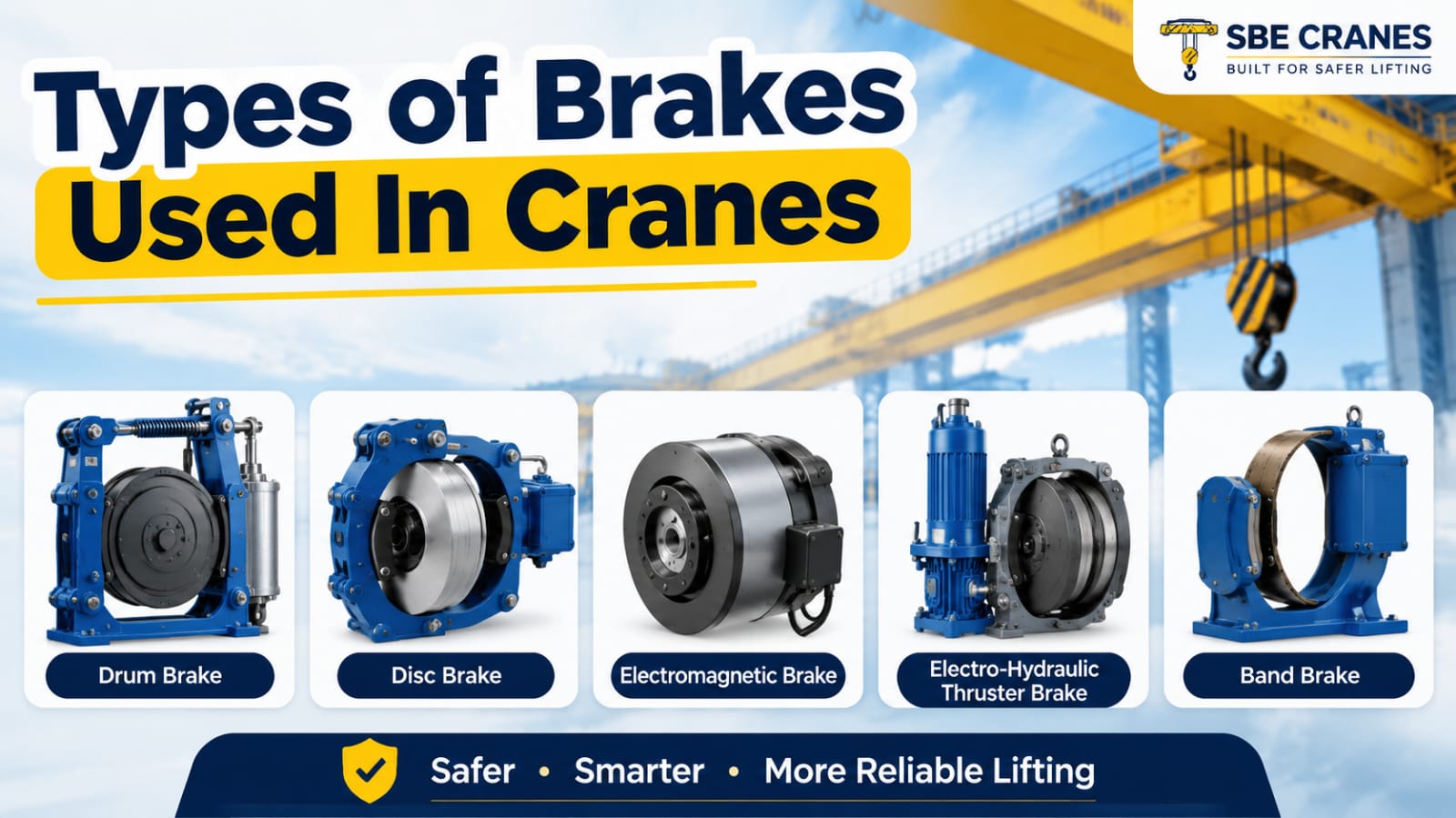
These brake systems are available in different designs, such as drum brakes, disc brakes, electromagnetic brakes, electro-hydraulic brakes, and band brakes. The right choice depends on factors like the crane’s lifting capacity, working conditions, and frequency of operation.
In this guide, we’ll explain each type of crane brake, how it works, and how to choose the right one for your application.
Why Crane Brakes Are a Safety-Critical Component
The main purpose of a crane brake is to prevent unwanted movement. For example, if a suspended load continues to fall even after the hoist motor has stopped, it becomes a serious safety risk.
Most crane brakes are designed to be fail-safe. This means the brake stays engaged by default using spring force, and electricity is only used to release it. If there is a power failure while lifting a load, the brake automatically engages again, preventing the load from falling.
Because of this safety feature, many crane safety standards require independent hoisting systems to have more than one braking system instead of relying on a single brake.
Holding Brakes vs. Control Brakes
Before understanding the different brake designs, it’s important to know the two main functions that a crane brake performs.
A holding brake stops the crane and keeps the load in a fixed position after movement has stopped. Depending on the brake type, it is generally designed to hold around 100–125% of the crane’s full-load hoisting torque. Common examples include motor brakes, shoe brakes, electric disc brakes, and mechanical load brakes.
A control brake works while the crane is moving. Its main job is to control the speed of the load, especially during lowering, and prevent the load from descending too quickly.
Most independent hoisting systems require both a holding brake and a control brake. The only exception is some worm-geared hoists, where the gear design itself prevents overspeed.
For heavy-duty industries such as steel plants, shipyards, and molten metal handling, an additional emergency brake is often installed as an extra safety backup.
Drum Brakes
Drum brakes work by pressing brake shoes or a brake band against a rotating drum. A spring keeps the brake engaged, while an electromagnetic actuator or hydraulic thruster releases it during normal crane operation.
Drum brakes are one of the most commonly used brake types for crane hoisting and travelling mechanisms. They are popular because they have a simple design, provide reliable braking performance, and are easy to maintain when properly adjusted.
Disc Brakes
Disc brakes use brake pads that press against a rotating disc to create friction and stop movement. They work in a similar way to the disc brakes used in cars.
They are widely used in hoists, trolleys, bridge cranes, EOT cranes, gantry cranes, and crane winches.
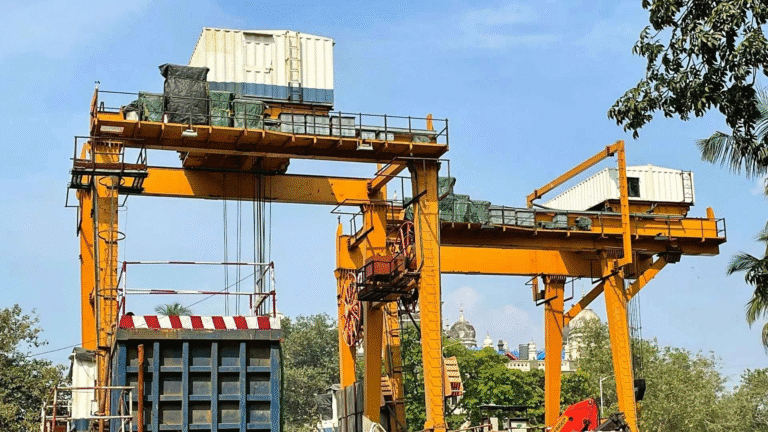
Electromagnetic disc brakes are especially common in ports and container handling equipment. They offer quick response, compact size, and precise braking, making them ideal for container gantry cranes, rail-mounted gantry (RMG), and rubber-tyred gantry (RTG) cranes.
Electromagnetic Brakes
Electromagnetic brakes use an electric coil to keep the brake released during operation. When power is switched off or interrupted, the spring automatically applies the brake.
These brakes respond quickly and can be easily connected to a crane’s electrical control system, making them a popular choice for modern overhead cranes and automated warehouse cranes.
However, because they depend on electrical components such as the power supply, brake coil, contactors, limit switches, and emergency-stop circuit, any electrical problem can affect their operation. As a result, brake issues are often checked together with the crane’s electrical system.
Electro-Hydraulic Thruster Brakes
Electro-hydraulic thruster brakes combine hydraulic force with a spring-applied fail-safe braking system. A hydraulic thruster releases the brake during operation, while the spring automatically applies it when power is lost.
These brakes are commonly used in large cranes and heavy-duty industries because they provide strong, reliable, and consistent braking performance.
Industries such as steel manufacturing, mining, wind energy, and other heavy industrial applications often prefer electro-hydraulic thruster brakes because they can handle continuous operation and demanding working conditions.
Band Brakes
Band brakes use a flexible metal band wrapped around a rotating drum. When the band tightens, friction is created, slowing down or stopping the movement.
Band brakes are commonly used in some hoisting and travelling mechanisms where a simple, compact, and cost-effective braking solution is suitable.
Mechanical and Hydraulic Load Brakes
Mechanical load brakes have a different purpose from holding brakes, even though both are used in crane hoists.
A holding brake keeps the load stationary after it has stopped moving.
A load brake controls the speed while lowering the load, preventing it from descending too quickly or entering free fall.
In heavy-duty industries like steel plants and shipyards, hydraulic or fail-safe mechanical brakes are commonly used for controlled lowering. In lighter-duty EOT cranes, electromagnetic braking systems can also perform this function.
How to Choose the Right Crane Brake
Choosing the right crane brake depends on more than just the brake itself. You should also consider the crane’s hoist type, lifting capacity, duty cycle, control system, operating environment, and how often the crane is used.
A brake that works well for occasional lifting may not be suitable for continuous industrial operations.
Here are the four main factors to consider:
- Load capacity and duty cycle – Cranes that lift heavier loads or operate continuously usually require electro-hydraulic or hydraulic brakes, while lighter cranes can often use electromagnetic brakes.
- Operating environment – High temperatures, dust, moisture, and harsh industrial conditions require stronger and more durable braking systems, such as hydraulic brakes.
- Application type – Hoisting, travelling, slewing, and luffing movements all have different braking requirements. Port and container cranes often use fast-acting disc brakes.
- Safety standards – Many national and international crane standards require fail-safe braking systems, making them an essential safety feature rather than an optional upgrade.
Maintenance Considerations
Even the best crane brake needs regular maintenance to work safely and reliably.
Good maintenance practices include:
- Inspect brake linings and brake pads regularly for wear.
- Lubricate moving parts to reduce wear and improve performance.
- Check the voltage and current supply of electromagnetic brake systems.
- Watch for any delay or unusual response while braking and fix the issue immediately.
Using the wrong brake or failing to maintain it properly can increase the risk of crane accidents and equipment damage.
Final Word
Choosing the right crane brake means selecting the correct brake type—drum, disc, electromagnetic, electro-hydraulic, or band-based on the crane’s load capacity, working conditions, and operating requirements.
At the same time, every crane should have the appropriate combination of holding and control brakes to meet safety standards and ensure reliable operation.
Understanding these brake types helps engineers, buyers, and maintenance teams select the right solution, improve safety, and avoid costly equipment failures.