
Types of Motors Used in EOT Cranes and How to Select the Right One
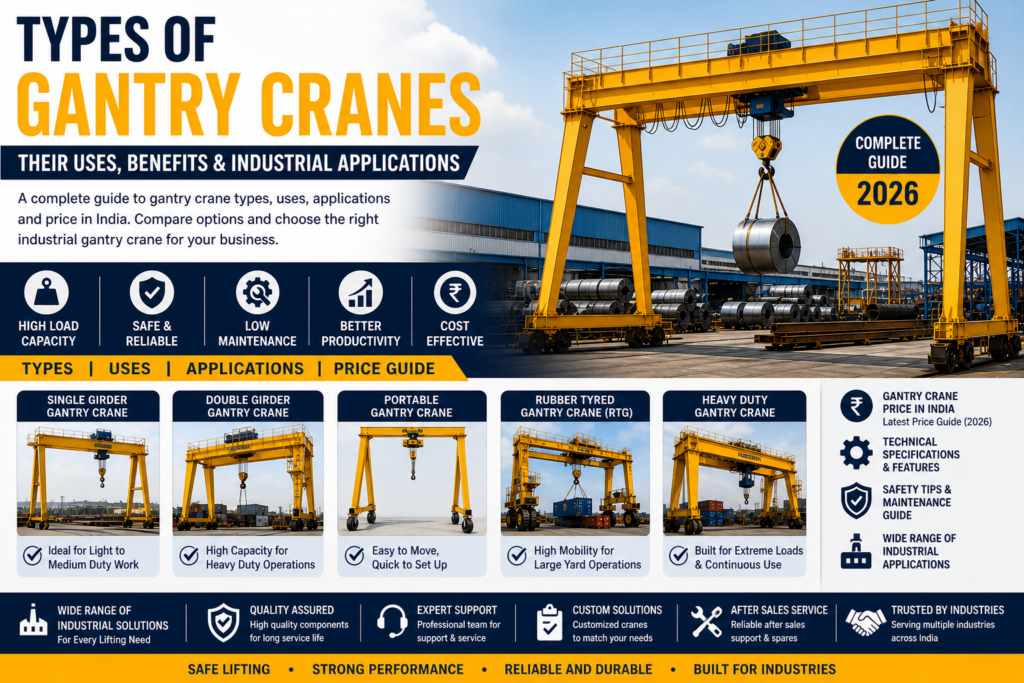
In today’s industrial environment, efficient material handling is essential for improving productivity and safety. A gantry crane is one of the most flexible and cost-effective solutions used across construction, warehouses, and manufacturing units. From portable gantry cranes for small jobs to heavy duty gantry cranes for large projects, these systems handle a wide range of lifting needs.
With increasing demand in industries like infrastructure, logistics, and steel, selecting the right crane has become more important than ever. Factors like load capacity, mobility, and working conditions play a key role in decision-making.
In this complete guide, you will learn about different gantry crane types, their practical uses, major applications, detailed technical specifications, gantry crane price in India, and which industries benefit the most. This will help you choose the right solution from trusted gantry crane manufacturers in India with confidence.
What is a Gantry Crane?
A gantry crane is a type of lifting equipment that is supported by vertical legs and moves on wheels or rails, making it independent of any building structure. Unlike traditional overhead cranes, an industrial gantry crane does not require permanent installation, which makes it highly flexible for both indoor and outdoor applications.
These cranes are widely used in industries where heavy material handling is required but installing an overhead crane system is not practical or cost-effective. From small workshops using a portable gantry crane to large-scale industries operating heavy duty gantry cranes, this equipment is designed to handle a wide range of lifting tasks efficiently.
The basic structure of a gantry crane includes:
- A horizontal beam (girder) for lifting loads
- Supporting legs on both sides
- A hoist and trolley system for movement
- Wheels or rails for mobility
Depending on the requirement, different gantry crane types such as single girder gantry crane, double girder gantry crane, and rubber tyred gantry crane are used for specific gantry crane applications.
Because of their flexibility, ease of installation, and cost-effectiveness, gantry cranes have become a preferred choice for many industries in India.
Types of Gantry Cranes
Understanding different gantry crane types is essential for selecting the right industrial gantry crane based on actual operating conditions. The correct choice depends on load capacity, span, lifting height, duty cycle, and mobility requirements. Choosing the right crane type improves efficiency, reduces downtime, and ensures safe material handling in industrial environments.
1. Single Girder Gantry Crane
A single girder gantry crane uses a single beam supported by two legs, with a hoist typically running below the girder. It is designed for light to medium-duty operations where cost-effectiveness and simplicity are important.
Technical Details:
- Capacity: 1 to 20 Ton
- Span: Up to 25–30 meters
- Duty Class: Moderate use
Key Features:
- Underslung hoist design reduces overall height requirement
- Lightweight structure reduces load on wheels and foundation
- Suitable for rail-mounted or wheel-mounted configurations
Advantages:
- Lower initial investment
- Easy installation and maintenance
- Energy-efficient for daily operations
- Suitable for standard gantry crane uses
Consideration:
- Limited lifting height and not suitable for heavy-duty continuous operations
2. Double Girder Gantry Crane
A double girder gantry crane consists of two parallel beams with a top-running hoist. This design provides higher load capacity, better stability, and increased lifting height.
Technical Details:
- Capacity: 20 to 200+ Ton
- Span: Up to 40–50 meters
- Duty Class: Heavy-duty and continuous use
Key Features:
- Top-mounted hoist allows greater lifting height
- Strong structural design for long spans
- Suitable for integration with advanced control systems
Advantages:
- Handles heavy loads efficiently
- Better stability and load distribution
- Ideal for continuous and demanding operations
- Suitable for high-performance gantry crane applications
Consideration:
- Higher cost and requires proper installation planning
3. Portable Gantry Crane
A portable gantry crane is a lightweight and movable crane mounted on wheels or castors. It is designed for flexibility and quick movement across different work areas.
Technical Details:
- Capacity: 0.5 to 5 Ton
- Span: 2 to 10 meters
- Height: Adjustable in many designs
Key Features:
- Modular design for easy assembly and transport
- Can be used on standard industrial floors
- Available with manual or electric hoists
Advantages:
- Easy to relocate within the facility
- No permanent installation required
- Quick setup and dismantling
- Cost-effective for light-duty gantry crane uses
Consideration:
- Limited load capacity and not suitable for heavy industrial applications
4. Rubber Tyred Gantry Crane (RTG)
A rubber tyred gantry crane operates on rubber tyres, allowing movement without fixed rails. It is mainly used in large outdoor operations where flexibility is required.
Technical Details:
- Capacity: 20 to 100+ Ton
- Mobility: Tyre-mounted with diesel-electric or electric systems
Key Features:
- Can move freely across large operational areas
- No rail infrastructure required
- Suitable for repetitive handling cycles
Advantages:
- High mobility and flexibility
- Reduced infrastructure cost
- Efficient for large-scale handling operations
- Widely used in advanced industrial gantry crane systems
Consideration:
- Requires skilled operation and regular maintenance
5. Heavy Duty Gantry Crane
A heavy duty gantry crane is designed for very high load capacities and continuous operation in demanding industrial environments. These cranes are typically custom-built based on project requirements.
Technical Details:
- Capacity: 50 Ton to 300+ Ton
- Duty Class: Continuous heavy-duty operation
Key Features:
- Reinforced structure for high load stress
- Designed for long operational cycles
- Can include advanced safety and control systems
Advantages:
- Handles extremely heavy loads
- Durable and reliable performance
- Long service life with proper maintenance
- Suitable for critical gantry crane applications
Consideration:
- High investment and requires proper engineering and planning
At SBE Cranes, we supply all types of gantry cranes with proper design, high-quality components, and reliable support to meet real industrial requirements.
Safety Standards to Consider
Safety is a critical factor when operating a gantry crane, especially in heavy lifting environments. Following proper safety standards ensures reliable performance and reduces the risk of accidents during different gantry crane uses.
Must-Have Safety Features:
Overload Protection
Prevents the crane from lifting beyond its rated capacity, protecting both equipment and operators.
Emergency Stop System
Allows immediate shutdown of the crane in case of any unsafe situation.
Limit Switches
Controls the movement of the crane and prevents over-travel of the hoist, trolley, or bridge.
Anti-Collision Systems
Essential in areas where multiple cranes operate, helping avoid collisions and operational damage.
Proper Grounding
Ensures electrical safety and protects against short circuits or power-related risks.
Compliance with Standards
Every industrial gantry crane should comply with relevant safety and quality standards. In India, this includes:
- IS (Indian Standard) codes
- Factory safety regulations
- Electrical and operational safety guidelines
Proper compliance ensures safe operation and long-term reliability across all gantry crane applications.
Maintenance Tips for Long Life
Regular maintenance is essential to ensure smooth performance and long service life of a gantry crane. Proper care also reduces breakdowns and improves overall efficiency.
Key Maintenance Practices:
Regular Lubrication
Lubricate moving parts to reduce friction and prevent wear.
Check Wire Ropes and Hooks
Inspect for wear, damage, or deformation to avoid failure during lifting.
Inspect Wheels and Rails
Ensure smooth movement and proper alignment of the crane.
Monitor Electrical Systems
Check panels, wiring, and control systems to prevent electrical issues.
Conduct Periodic Safety Audits
Regular inspections help identify potential problems before they become serious.
Common Mistakes to Avoid
Many buyers and operators make mistakes that affect crane performance and safety. Avoiding these can improve efficiency and reduce long-term costs.
Choosing Low Capacity to Save Cost
Selecting a lower capacity gantry crane can lead to overloading risks and reduced equipment life.
Ignoring Future Expansion Needs
Always consider future load increase or operational growth when selecting a crane.
Not Checking Supplier Quality
Working with unreliable suppliers can result in poor design and frequent breakdowns.
Skipping Safety Features
Ignoring essential safety systems increases the risk of accidents and operational failure.
Gantry Crane Technical Specifications
This quick comparison table helps buyers understand key differences between major gantry crane types and select the right gantry crane based on capacity, span, and usage requirements.
Parameter | Single Girder | Double Girder | Portable | RTG |
Capacity | 1–20 Ton | 20–200+ Ton | 0.5–5 Ton | 20–100 Ton |
Span | Up to 30m | Up to 50m | 2–10m | Large yard span |
Height | Medium | High | Adjustable | High |
Mobility | Fixed/Rail | Rail Mounted | Wheel Mounted | Rubber Tyres |
Use Case | Workshop | Heavy Industry | Small Jobs | Ports |
Key Industrial Uses of Gantry Cranes for Efficient Material Handling
A gantry crane is widely used across industries for handling heavy loads safely and efficiently. Different gantry crane types are selected based on the nature of work, load capacity, and working environment. Below are the most important and practical gantry crane uses in real industrial operations:
Loading and Unloading Heavy Materials
Gantry cranes are commonly used for loading and unloading raw materials, finished goods, and heavy components. They help reduce manual labor, improve speed, and ensure safe handling in warehouses, yards, and industrial plants.
Machine Installation and Shifting
In manufacturing industries, heavy machines need precise positioning. An industrial gantry crane allows safe lifting, alignment, and placement of machinery during installation, maintenance, or relocation within the facility.
Fabrication and Assembly Work
In fabrication units, gantry cranes support lifting of steel structures and components during cutting, welding, and assembly. This improves workflow efficiency and reduces handling time.
Container Handling Operations
In logistics and port environments, gantry cranes – especially rubber tyred gantry cranes. are used for lifting, stacking, and moving containers. This ensures faster and more organized cargo handling.
Construction and Infrastructure Lifting
Gantry cranes are widely used in construction projects for lifting heavy materials such as steel beams, precast structures, and equipment. Their ability to operate in open areas makes them suitable for infrastructure and large-scale projects.
Gantry Crane Applications Across Industries
The demand for industrial gantry crane systems is growing across multiple sectors due to their flexibility, cost-effectiveness, and ability to handle heavy loads in both indoor and outdoor environments. Different gantry crane types are used in specific industries based on operational requirements, load capacity, and working conditions.
Manufacturing and Production Plants
In manufacturing units, gantry crane applications include handling raw materials, moving semi-finished goods, and supporting production lines. A single girder gantry crane is commonly used for medium-duty operations, while a double girder gantry crane is preferred for heavy and continuous production environments.
Warehousing and Logistics
In warehouses and distribution centers, gantry crane uses focus on loading, unloading, and internal material movement. These cranes improve efficiency, reduce manual handling, and ensure faster turnaround time in logistics operations.
Ports and Container Terminals
Large-scale gantry crane applications are seen in ports, where rubber tyred gantry cranes are used for container stacking, loading, and yard management. These cranes are essential for handling high-volume cargo operations efficiently.
Construction and Infrastructure Projects
In construction, gantry cranes are used for lifting precast structures, steel beams, and heavy construction materials. A heavy duty gantry crane is often required for large infrastructure projects such as bridges, metro work, and industrial construction.
Steel and Heavy Engineering Industries
In steel plants and heavy engineering units, industrial gantry crane systems are used for handling large metal components, coils, and heavy machinery. These environments require high-capacity cranes with reliable performance under continuous operation.
Shipyards and Marine Applications
Shipbuilding and repair operations depend on gantry crane types for lifting large structures and heavy components. These applications require precision, stability, and high load capacity.
At SBE Cranes, we work with these industry requirements to supply gantry cranes that match actual site conditions and operational needs.
Gantry Crane Price in India (2026 Guide)
Understanding the gantry crane price in India is important for planning your investment. The cost of a gantry crane varies widely depending on design, capacity, and technical requirements. There is no fixed price because most industrial gantry crane systems are customized based on application needs.
Approximate Price Range
- Portable gantry crane: ₹1.5 lakh to ₹5 lakh
- Single girder gantry crane: ₹5 lakh to ₹15 lakh
- Double girder gantry crane: ₹15 lakh to ₹80+ lakh
- Rubber tyred gantry crane: ₹1 crore and above
- Heavy duty gantry crane: Custom pricing based on project
Key Factors That Affect Gantry Crane Price
The final price of a gantry crane depends on several important factors:
Load Capacity
Higher capacity cranes require stronger materials and components, which increases cost.
Span and Lifting Height
Larger span and higher lifting height require more structural strength and engineering.
Type of Gantry Crane
Different gantry crane types such as single girder, double girder, or rubber tyred gantry crane have different pricing levels.
Duty Cycle and Usage
Cranes designed for continuous heavy-duty operation cost more than those used occasionally.
Mobility and Design
Rail-mounted cranes are generally more economical than highly mobile systems like RTG cranes.
Customization and Features
Additional features like remote control, automation, anti-collision systems, and weather protection increase the price.
Important Buying Insight
When evaluating gantry crane price in India, avoid selecting based on lowest cost alone. A lower-priced crane may lead to higher maintenance, reduced efficiency, and safety risks over time.
It is always better to select a crane that matches your actual operational requirements and offers long-term reliability.
Benefits of Using Gantry Cranes
A gantry crane is widely used across industries because of its flexibility, cost efficiency, and reliable performance. Different gantry crane types are designed to handle various lifting requirements, making them suitable for workshops, warehouses, construction sites, and large industrial operations.
1. Cost Efficiency
One of the key benefits of a gantry crane is its lower overall cost compared to overhead crane systems. Since it does not require complex building support structures, installation and civil costs are significantly reduced. This makes it a practical choice for businesses looking for a budget-friendly lifting solution.
2. High Flexibility
Different gantry crane types such as portable gantry cranes and rubber tyred gantry cranes offer excellent flexibility. These cranes can be used in multiple locations and easily adapted to changing work requirements, making them suitable for dynamic operations.
3. Easy Installation and Relocation
A gantry crane can be installed quickly without major structural changes. In the case of a portable gantry crane, the system can be easily moved and repositioned as needed. This reduces downtime and allows faster setup across different work areas.
4. Improved Productivity
Using a gantry crane helps speed up lifting operations such as loading, unloading, fabrication, and construction work. It reduces manual effort and ensures smoother workflow, resulting in better productivity and time savings.
5. Wide Range of Customization
Gantry cranes are available in various sizes and configurations to match specific requirements. From a single girder gantry crane for light-duty work to a heavy duty gantry crane for large projects, customization ensures better performance and efficiency.
6. Suitable for Indoor and Outdoor Use
A major advantage of a gantry crane is its ability to work effectively in both indoor and outdoor environments. This makes it suitable for warehouses, workshops, yards, and construction sites.
7. Lower Maintenance Requirements
Due to its simple and independent structure, a gantry crane generally requires less maintenance compared to more complex systems. This helps reduce long-term operational costs and improves reliability.
8. Improved Safety
Modern gantry crane types are equipped with essential safety features such as overload protection, limit switches, and controlled lifting systems. This ensures safe operation while handling heavy loads.
How to Choose the Right Gantry Crane
Selecting the right gantry crane is a critical decision that directly affects safety, efficiency, and long-term operational cost. With multiple gantry crane types available, it is important to evaluate your actual working requirements instead of choosing based only on price.
Understand Your Load Requirement
Start by identifying the maximum weight you need to lift. Always consider peak load, not average load. Choosing the correct capacity ensures safe and reliable gantry crane uses without overloading risk.
Check Span and Working Area
The span of the crane should match your workspace layout. A properly selected span ensures smooth movement and full coverage of the working area without obstruction.
Decide Lifting Height
Lifting height should be based on how high materials need to be moved or stacked. This is especially important in warehouses, fabrication units, and construction projects.
Evaluate Usage Frequency (Duty Cycle)
If the crane will be used occasionally, a lighter system like a single girder gantry crane may be sufficient. For continuous operations, a double girder gantry crane or heavy duty gantry crane is more suitable.
Choose the Right Mobility Option
- Fixed movement → Rail-mounted crane
- Flexible movement → Wheel-mounted or portable gantry crane
- Large yard operations → rubber tyred gantry crane
Consider Working Environment
Outdoor environments require weather-resistant designs, while indoor setups may focus more on space optimization and efficiency.
Check Safety Features
Ensure the crane includes essential safety components such as overload protection, limit switches, emergency stop systems, and proper control mechanisms.
Plan for Future Expansion
Always consider future load increase or operational expansion. Selecting a slightly higher capacity crane avoids replacement costs later.
Why Choose the Right Gantry Crane Manufacturer
Selecting the right supplier is as important as selecting the crane. The performance, safety, and long-term reliability of a gantry crane depend heavily on the manufacturer’s experience, design quality, and support. Choosing the right gantry crane manufacturers in India ensures better results across different gantry crane applications.
Look for:
Experience in Industry
A manufacturer with strong experience understands different gantry crane types such as single girder gantry crane, double girder gantry crane, and heavy duty gantry crane. This helps in selecting the right solution based on actual load conditions and gantry crane uses.
Custom Design Capability
Every project has different requirements. A reliable manufacturer should provide customized industrial gantry crane solutions based on span, lifting height, capacity, and working environment instead of only standard designs.
After-Sales Support
Strong after-sales service is important for smooth operation, maintenance, and spare parts availability. This ensures your gantry crane performs efficiently across different gantry crane applications without long downtime.
Compliance with Standards
The crane should meet required safety and quality standards. Proper compliance ensures safe operation and reliable performance in all types of gantry crane uses.
If you are searching for gantry crane manufacturers in India, always compare quality, design capability, and long-term support, not just price.
At SBE Cranes, we provide reliable and customized gantry crane solutions designed to meet real industrial requirements and ensure long-term performance.
Conclusion
Choosing the right gantry crane can significantly improve operational efficiency, safety, and productivity. By understanding different gantry crane types, gantry crane uses, gantry crane applications, and gantry crane price in India, businesses can make a well-informed and practical decision.
Selecting a reliable supplier and focusing on proper specifications ensures long-term performance and reduced operational issues. A well-planned investment in the right industrial gantry crane helps improve workflow, reduce manual effort, and support business growth.
At SBE Cranes, we provide dependable gantry crane solutions designed to match real industrial requirements and deliver consistent performance over time.

Founded in year 2002 by Mr. Rajan K Nair, who has been the backbone of the firm for the past 25 years with his vast experience of more than 30 years with designing, manufacturing, refurbishment, erection and commissioning of all kind of material handling equipment’s. .. Read More